You just got a solar quote, and the battery is a line item that made you pause. Or you already have panels, and you've been wondering whether adding storage is worth the investment. Either way, the question is the same: what does a home battery actually do, and does it make sense for your situation?
The short answer is that a home battery changes what your energy system can do during an outage and, depending on your utility's rate structure, how much of your electricity you buy from the grid versus use from your own production. Whether it's the right investment depends on your goals.
Here's a clear look at what battery storage does, where it makes the most sense for Carolina homeowners, and how to think about sizing and timing.
Cape Fear Energy Systems designs battery backup systems for homes across NC and SC as part of a complete whole-home energy plan.
Is Home Battery Backup Worth it for a Carolina Home?
It depends on what you want your energy system to do. Battery storage is worth a close look if any of these describe your situation:
- You want your home to stay powered during outages, whether from summer storms, tropical weather, or grid events
- You have solar and want to use more of your own production rather than sending excess to the grid
- Your utility has time-of-use rates where electricity costs more during peak hours
- You want a quieter, cleaner backup option alongside or instead of a generator
Battery alone isn't the right answer for every homeowner. But for a home along the Carolinas, especially in areas where outages are a seasonal reality and not a hypothetical, the backup case is one of the strongest anywhere in the country.
What a Home Battery Actually Does, in Plain Terms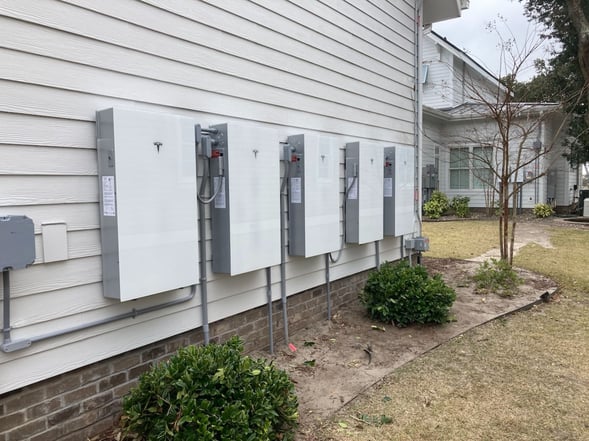
A home battery stores electrical energy and releases it when you need it. During normal grid operation, the battery charges from your solar panels or from the grid during off-peak hours, depending on how it's configured. When the grid goes down, the battery automatically switches your home into backup mode, powering the loads it's connected to without any manual steps.
The transition is typically seamless. Most homeowners don't notice the moment it happens. The refrigerator stays on, the lights stay on, and the system operates quietly until the grid comes back. How much a battery can cover and for how long depends on battery capacity, what loads are connected, and whether solar is recharging the system during the outage. There's no single answer that applies to every home, which is why sizing starts with your specific loads and goals, not a default configuration.
For a plain-English explanation of how home battery storage works day to day, our guide to home batteries breaks it down from charge cycles to backup modes.
The Backup Power Case for Carolina Homes
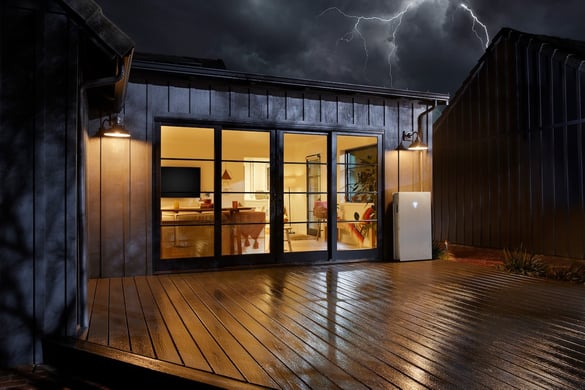
Wilmington and the surrounding coast experience some of the most active storm seasons in the Southeast. Tropical systems, nor'easters, summer thunderstorms, and occasional prolonged grid events are part of life here in a way that's different from inland communities. For a homeowner who's been through a multi-day outage, the appeal of battery backup isn't abstract.
Unlike a portable generator, a battery requires no fuel, makes no noise, produces no fumes, and starts automatically. Unlike a whole-home standby generator, it has a capacity limit, which is why some homeowners choose both: battery for seamless immediate backup on most outages, and a generator for extended events that outlast stored capacity. Our side-by-side guide to battery versus generator backup for coastal Carolina homes walks through how to think about that decision for your property.
Plan your backup power strategy
Not Sure Whether Battery Backup Is Right for Your Home?
Our local team designs solar and battery systems around your specific loads, goals, and outage history. Get a free estimate and we'll show you exactly what battery storage would look like for your property.
Get a Free EstimateThe Energy Economics Case
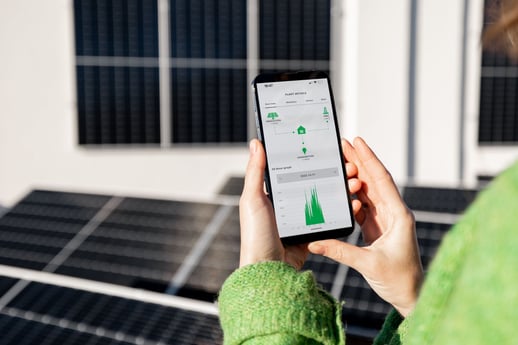
When solar panels produce more than a home is using at a given moment, the excess normally flows back to the grid. With a battery in the system, that excess charges storage first, so it's available later in the day when production drops but the home is still drawing power. The result is that a higher share of what the panels produce gets used by the household directly, rather than exported at whatever rate the utility currently credits.
Whether this translates into meaningful bill reduction depends on your utility's current net metering terms. In Duke Energy territory, that structure has been evolving, which is one reason battery economics have shifted for some homeowners. Our team walks through the current picture for your specific utility as part of every battery estimate.
The U.S. Department of Energy's solar-plus-storage resource explains how battery systems work alongside solar and what homeowners should consider before buying.
How Battery Sizing Works
Battery storage systems are sized around what you actually need to back up, not a one-size number. The first conversation is always about priorities: what loads matter most to you during an outage? Keeping the refrigerator, lights, and Wi-Fi running is a different scope than powering central air through a three-day storm. Those are genuinely different systems with different capacity requirements.
From there, sizing factors in how long you want coverage, whether solar will be available to recharge during the outage, and how your home's electrical system is set up. The electrical integration, transfer switching, and load panel configuration matter as much as the battery unit itself, which is why our team takes a holistic approach when designing your system, rather than just looking at the product by itself.
Adding Battery Now vs. Planning for it Later
If you're getting solar now and aren't sure about the battery yet, it's worth telling your installer that battery is a future possibility. A system designed to accommodate battery addition is more straightforward to expand than one that wasn't. Panel layout, inverter selection, and electrical configuration all affect how cleanly a battery integrates later.
If you already have solar and are adding battery now, a site assessment will determine whether your existing system is compatible and what, if anything, needs to be upgraded. Most modern solar systems can accommodate battery addition, though the specifics vary by equipment and inverter type.
EnergySage's home battery storage guide covers what to look for in battery capacity, chemistry, and compatibility when evaluating systems for a residential install.
Ready to See What Battery Backup Looks Like for Your Home?
The right battery system is one sized around your home's specific loads and goals, installed by a team that handles the full scope. Cape Fear Energy Systems is turnkey and in-house: we design, permit, and install every system with our own NABCEP-certified team, no subcontracting, and we support your system locally long after the installation is complete.
Your local partner in energy independence since 2007
Design the Right Battery System for Your Carolina Home
Our turnkey, NABCEP-certified team designs solar, battery, generator, and whole-home energy systems for homes and businesses across NC and SC, with no subcontracting and local support after every install.
Get a Free Estimate