
Your new EV came with a charging cable that plugs into a regular wall outlet, and it works, technically. But after a few weeks of watching the "time to full charge" estimate creep past overnight, you start wondering if there's a faster way that doesn't involve driving to a public charger every few days, whether you're commuting around Wilmington or out toward the beach towns.
There is, and it comes down to a choice between Level 1 and Level 2 home charging. The difference isn't just speed; it affects your electrical panel, your daily routine, and how much you'll actually use the car you bought.
Cape Fear Energy Systems designs and installs home EV charging as part of a whole-home electrical plan for homeowners across the Carolinas. Here's what separates Level 1 from Level 2, what each one requires from your home's electrical system, and how to decide which one makes sense for you.
Quick Answer: What's the Difference Between Level 1 and Level 2 EV Charging?
- Level 1 charging uses a standard 120-volt household outlet, the same kind that powers most home appliances. It's the slowest option, typically adding a few miles of range per hour, and needs no special equipment or electrical work beyond a regular outlet.
- Level 2 charging uses a 240-volt circuit, similar to what an electric dryer or oven uses, and typically adds considerably more range per hour. It requires a dedicated charger unit and, usually, a licensed electrician to install the circuit and hardware.
For most daily drivers, Level 2 charging is the more practical long-term option, but the right choice depends on how much you drive, how long the car sits at home, and what your electrical panel can support.
Level 1 Charging: The Basics
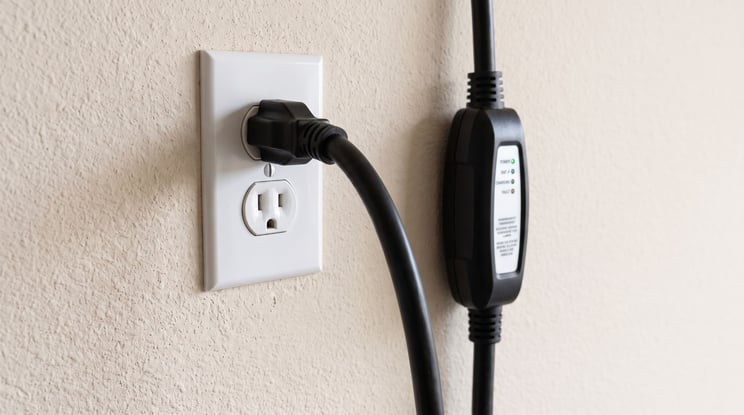
Level 1 charging is the simplest option because it uses the charging cable that comes with most EVs, plugged into any standard 120-volt outlet. There's no equipment to buy and no electrical work required as long as the outlet is in good condition and on its own circuit. The tradeoff is speed. Level 1 charging is slow enough that it mainly suits drivers with a short daily commute, a plug-in hybrid with a smaller battery, or a backup charging option for a home that already has Level 2 charging installed.
The Department of Energy's Alternative Fuels Data Center notes that most EV owners charge overnight at home using either Level 1 or Level 2 equipment, and that outdoor installation, common for Carolina homes without an attached garage, is just as safe as charging in one.
Level 2 Charging: The Basics
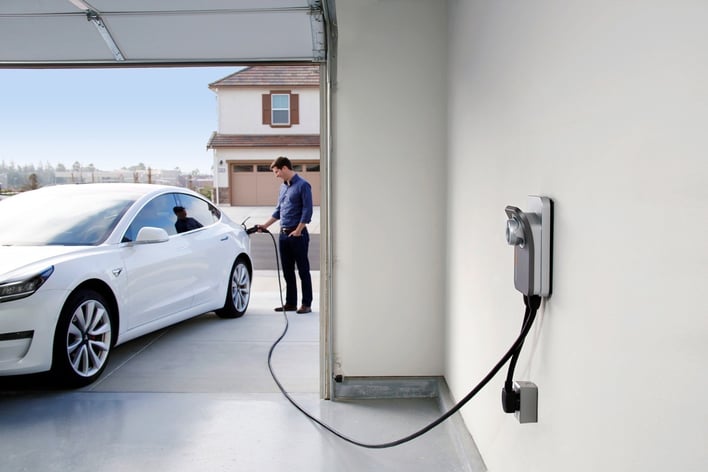
Level 2 charging requires a dedicated charger, sometimes called an EVSE (electric vehicle supply equipment), wired to a 240-volt circuit, similar to what a clothes dryer uses. Because it involves running a new circuit and mounting hardware, it's an electrical job that should be handled by a licensed electrician, not a DIY project. Most homeowners who drive daily and want to plug in overnight and wake up to a full charge end up choosing Level 2, since it charges considerably faster than Level 1 and fits more naturally into an evening-to-morning routine.
ENERGY STAR generally recommends Level 2 charging for drivers who cover more than 40 miles a day in a fully electric vehicle, which describes a lot of Carolina commuters covering ground between Wilmington, Leland, and the surrounding areas.
Plan your EV charging
Not sure your panel can handle Level 2?
Our turnkey, NABCEP-certified team evaluates your electrical panel and designs EV charging that fits your home, whether that's on its own or alongside solar and battery. Get a free estimate to find out what your home needs.
Get a Free EstimateWhat Your Electrical Panel Has to Do With It
Level 2 charging draws considerably more power than Level 1, so the first question is always whether your home's electrical panel has the capacity for a new 240-volt circuit. Older homes, common throughout historic Wilmington neighborhoods and older Carolina coastal towns, or homes with panels already running close to capacity, sometimes need a panel upgrade before a Level 2 charger can be added safely.
This is exactly the kind of decision that benefits from being planned alongside the rest of your home's electrical picture, especially if solar, a battery, or a generator might be part of your future plans too, so the panel is sized for where your home is headed, not just for today. A whole-home wiring evaluation tells you whether your panel can support Level 2 EV charging now or with future upgrades.
Charging Alongside Solar
For homeowners with solar, or considering it, EV charging adds another layer worth planning for. Charging times can be set to align with peak solar production hours where that makes sense for the household, and a properly sized system can help offset some of the added electric load an EV brings.
Homeowners adding EV charging alongside solar can plan both together so the system is sized for the added load from day one, rather than discovering later that the panels weren't built with an EV in mind.
None of this requires solar to make Level 2 charging worthwhile on its own, but for Carolina homes weighing both, especially with long sunny stretches for much of the year, planning them together tends to make more sense than adding each piece separately.
Choosing the Right Charging Setup for Your Home
The right answer usually comes down to how much you drive, how long the car sits at home each day, and what your panel can support. A short commute and an occasional charge might be fine on Level 1.
Daily driving and an overnight charging routine, the norm for most homeowners commuting across the greater Wilmington and coastal Carolina area, usually points to Level 2.
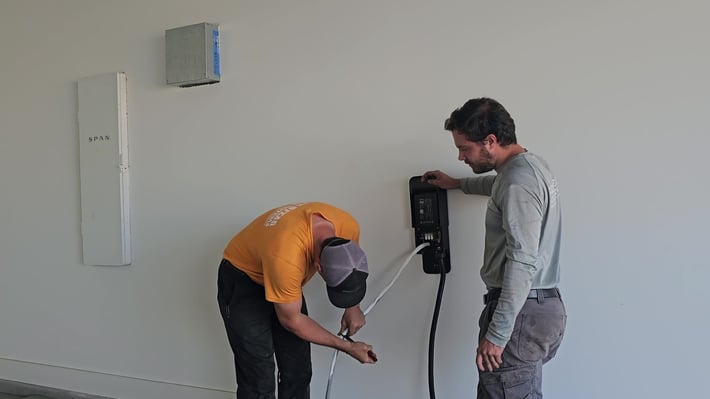
Either way, it's worth having a licensed professional look at your panel before you buy equipment, so you're not stuck choosing between an underpowered setup and an unplanned panel upgrade.
Your local partner in energy independence since 2007
Ready to charge smarter at home?
As a NABCEP-certified local team, we design EV charging, solar, battery, and generator systems that work together, for homes and businesses across NC and SC.
Get a Free Estimate