The cone shows up on the forecast, and your first thought, right after checking where the track is headed, is whether you need to do something about those solar panels. Get up there and take them down? Disconnect something? Call someone?
The short answer is: probably nothing, and definitely not on the roof. Solar panels installed to current coastal building codes are engineered for the wind loads that come with hurricane conditions in the Carolinas. What changes during a storm isn't whether your panels survive. It's how your system behaves electrically, and what happens after the storm clears.
Here's a clear look at how panels are built to handle hurricane-force wind, what you should actually do before a storm arrives, what to expect during and after, and how battery and generator backup fit into the picture for coastal homes.
Cape Fear Energy Systems has been designing and installing solar systems for Carolina homes since 2007, built to meet local wind load requirements and engineered for long-term performance in this climate.
What Really Happens to Solar Panels During a Hurricane?
For a properly installed system, the panels stay on the roof. Solar panels installed to Carolina building codes must meet significant wind load requirements; coastal and near-coastal areas carry higher requirements than inland installations. The panels themselves and the racking hardware are engineered and tested for high-wind conditions as part of the permitting and inspection process.
During the storm, if the utility grid loses power, your inverter automatically shuts off; this is a required safety feature, not a malfunction.If you have battery storage, your system switches to backup mode and continues powering your home independently while the grid is down.
After the storm, a visual inspection from the ground and a check on your monitoring app are the right first steps. The scenario in which panels fail during a storm is almost always due to improper installation, substandard mounting hardware, or a roof that was already compromised.
A permitted, inspected installation with quality components is a very different situation, and it's one reason working with a local, turnkey team that's never subcontracted matters more here than in milder climates.
How Solar Panels Are Built for Hurricane Conditions

Modern solar panels are tested for wind resistance as part of their certification process, and the racking systems that hold them to your roof are engineered to specific load ratings. In the Carolinas, permitted solar installations must meet the structural requirements of the local building code, which in coastal and near-coastal areas accounts for the higher wind speeds that come with tropical weather.
What this means practically: the same permit process and final inspection that applies to any structural work on a Carolina home also applies to your solar installation. A system that passed inspection was verified to meet those standards before it ever faced a storm.
The coastal conditions that can affect long-term system performance, including salt air, humidity, strong winds, and wind-driven debris, are factors a locally experienced installation team considers from the start. Equipment and installation decisions should be based on the property’s specific roof, exposure, structural needs, and local requirements rather than location alone.
The Insurance Institute for Business and Home Safety publishes research on how rooftop equipment, including solar, performs under wind and storm conditions, and what installation standards contribute to better outcomes.
What to Do Before a Storm
Before a hurricane or major storm, the most important thing to know is what not to do: do not get on the roof to inspect, cover, or remove panels. Roofs before a storm are not safe surfaces to work on, and panels do not need to be removed or covered. Any pre-storm prep that involves the roof should wait until after the storm has fully passed and conditions are safe.
What you can do from the ground:
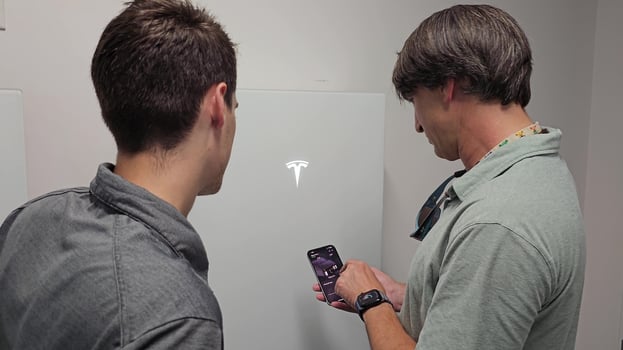
- Check your monitoring app. Note the current state of your system so you have a baseline to compare after the storm. If battery storage is part of your system, confirm it shows a full or near-full charge.
- Clear the area around the base of the home. Loose items that become airborne in high wind can cause damage to panels and to anything else in their path. This is standard storm prep for any exterior equipment.
- Know where your system's disconnect is. Your installer should have walked you through this at commissioning. If an emergency situation ever requires shutting the system down, you should know the location without having to search for it.
FEMA's Ready.gov covers what homeowners should do before, during, and after a storm, including steps for protecting home systems and equipment.
What Happens During the Storm
Once a storm makes landfall and the grid loses power, your solar system's inverter will automatically disconnect. This is anti-islanding protection, a required safety feature that prevents the system from sending power back into utility lines where crews may be working. It is not a malfunction and it does not mean anything is wrong with your panels.
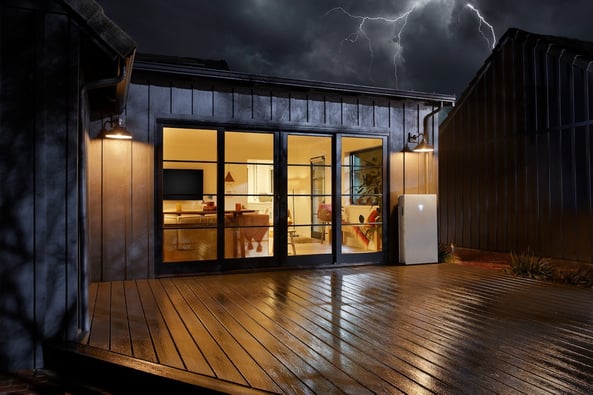
If your home has battery storage, that transition happens seamlessly. The battery detects the grid going down and switches your home to backup power (often without you noticing). Your panels will continue to generate power when the sun is accessible and channel it into the battery, extending how long your home can run independently.
Without battery storage, your home will be without power during the outage, the same as a home without solar. The panels are intact and ready to resume production the moment the grid comes back online, and the inverter reconnects.
For a deeper look at how battery-integrated solar systems keep your home running when the grid fails, see our guide to staying powered during hurricanes. Cape Fear Energy Systems designs battery backup systems for coastal Carolina homes built around the specific outage scenarios storm season brings.
See what solar looks like for your home
Let's Find Out Whether Solar Makes Sense for Your Property
Our local team has designed solar systems for Carolina homeowners since 2007. We start with your roof, your bill, and your goals and build a real plan around your home, not a national average. No pressure, just a free estimate.
Get a Free EstimateAfter the Storm: Inspection and Getting Back Online
Once conditions are safe and the storm has fully passed, a few steps will tell you quickly whether your system came through without issue.
Start from the ground. Walk around the home and look at the panels from below. You're checking for visible debris on the array, any panels that look shifted or cracked, and whether the mounting hardware appears intact. Do not get on the roof for this inspection. A pair of binoculars is a better tool than a ladder at this stage.
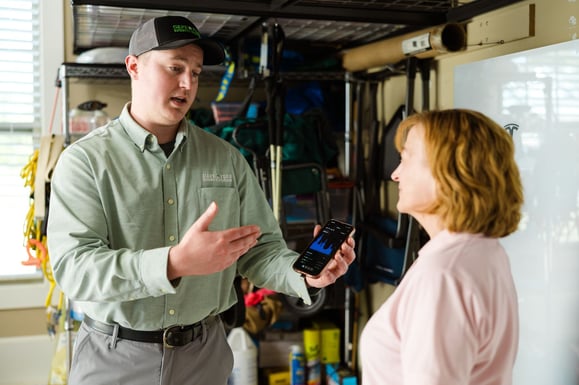
Check your monitoring app. Once the grid is restored and the inverter reconnects, your monitoring system will show whether production has resumed and whether any alerts or error codes are present. A system that comes back online showing normal production curves on a clear day is a good sign. A system showing significantly lower output than usual, or persistent alerts, is a signal to have it checked.
If anything looks physically damaged, or if the system doesn't resume normal operation after the grid is restored, submit a service request and our local team will assess what's happening and what it needs. Do not attempt to inspect wiring, open equipment, or get on the roof to investigate yourself.
The Backup Power Piece: Why Battery Changes the Storm Experience
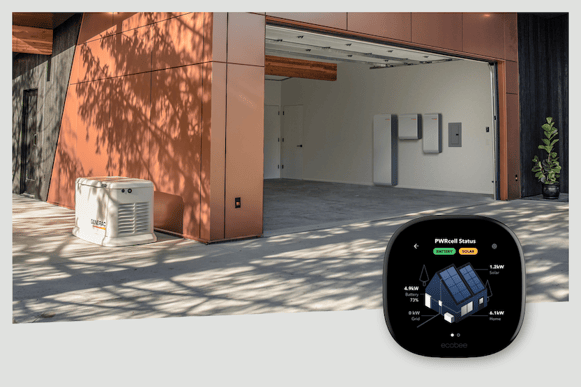
For coastal homeowners, the most meaningful upgrade alongside solar is battery storage, and storm season is the reason. A battery lets your solar system keep your home running through the duration of a grid outage, quietly and automatically, with no fuel, no noise, and no manual startup.
For outages that stretch beyond what battery capacity can cover, a whole-home standby generator adds the long-duration backstop that no battery can replace on its own. The combination of solar, battery, and a generator is the most resilient setup for a home that's in the path of regular tropical weather. For a side-by-side look at how battery backup and whole-home generators compare for coastal Carolina homes, see our guide to backup power for the coast.
Ready to Build a System That Holds Up When It Matters?
Storm season comes every year along the Carolina coast, and a solar system installed to coastal standards with battery backup is one of the most practical whole-home investments a homeowner in this area can make. Our local team has been designing and installing systems for North and South Carolina homes since 2007, with the pre- and post-install support that comes with a team that's actually based here.
Your local partner in energy independence since 2007
Get a Real Answer for Your Carolina Home
Our turnkey, NABCEP-certified team designs solar, battery, generator, HVAC, and EV systems for homes and businesses across NC and SC, with no subcontracting and a 25-year workmanship warranty.
Get a Free Estimate