You open the bill, look at the number, and check it twice, hoping you misread it. Nothing obvious changed. You didn't throw any parties, didn't buy new appliances, didn't run the heat any differently than last year. And yet here you are, wondering where it all went.
High electric bills usually trace back to a handful of causes, and the most common ones are more fixable than most homeowners realize. In the Carolinas specifically, the combination of long summers, high humidity, and aging home equipment creates conditions that quietly drive usage up year after year.
Here's a clear look at where residential electricity actually goes, what tends to spike bills in this climate, and what options are available to bring costs back under control for the long term.
Cape Fear Energy Systems approaches energy efficiency as part of a complete whole-home plan, helping Carolina homeowners identify and address what's actually driving their costs.
Why Is My Electric Bill So High?
In most homes, the answer comes down to one or more of these:
- An aging or oversized HVAC system working harder than it should, especially during long Carolina summers
- Sustained cooling demand from heat and humidity that runs equipment longer than homeowners in other climates experience
- A water heater, pool pump, or other high-draw appliance that's been quietly aging toward inefficiency
- Phantom loads from electronics and older appliances that draw power around the clock
- No solar offset, meaning 100 percent of what the home consumes comes from the utility at current rates
Most of these have real solutions, and identifying which ones apply to your home is the starting point.
Your HVAC System Is Almost Always the Biggest Driver
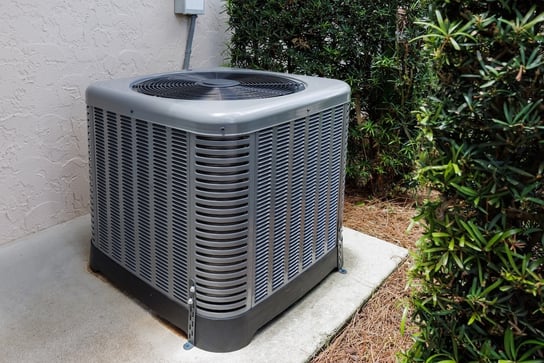
Heating and cooling accounts for roughly half of a typical home's electricity use, and in the Carolinas, where air conditioning runs hard for six or more months of the year, that share can be even higher. An older HVAC system that's lost efficiency over time doesn't just cool less effectively; it runs longer to try to reach the set temperature, and that extra runtime shows up directly on your bill.
A system that short-cycles, meaning it kicks on and off frequently without fully conditioning the air, is another sign that something is off. So is a system that's simply too large for the space it's cooling, a surprisingly common issue in homes where equipment was oversized on the original install.
The U.S. Energy Information Administration's data on home cooling costs shows that homes in the hot-humid Southeast, which includes North Carolina, spend a notably higher share of their total energy budget on air conditioning than the national average. If your system is aging, our guide to the signs it's time for an HVAC replacement covers what to watch for before you spend another dollar on repairs.
Why Carolina Summers Make It Worse
The Southeast climate is one of the most demanding in the country for residential cooling. The Carolinas regularly see weeks of temperatures in the upper 80s and 90s combined with humidity levels that make it feel worse. Air conditioners in this climate don't run in short bursts the way they do in drier regions. They run continuously, sometimes for hours at a stretch.
That sustained runtime is what makes summer bills here so much higher than what national averages suggest. And because humidity itself forces systems to work harder, a home with an older or undersized system doesn't just feel less comfortable. It spends more to feel that way.
Cape Fear Energy Systems installs high-efficiency HVAC systems for Carolina homes designed specifically for this climate's heating and cooling demands.
Let's look at your home's full energy picture
Not Sure What's Driving Your Electric Bill?
Our local team looks at the whole home, not just one product. Get a free estimate and we'll help you understand what's driving your costs and what would actually make a difference for your property.
Get a Free EstimateOther Things Worth Checking
HVAC is usually the main story, but a few other common culprits are worth ruling out.
Water heaters are the second-largest energy user in most homes, and an aging electric water heater working harder to maintain temperature can add meaningfully to your bill without any obvious signal. Pool and hot tub pumps are another significant draw that homeowners sometimes don't fully account for.
Phantom loads, meaning the power that electronics, chargers, smart devices, and older appliances draw even when they're not actively in use, add up more than most people expect across a full month. And in an older home with poor attic insulation or air sealing, the HVAC works harder than it needs to simply because conditioned air is escaping.
ENERGY STAR's home energy efficiency resources cover appliance efficiency ratings, phantom load reduction, and improvements that can meaningfully reduce residential electricity use.
What Solar Does to the Equation
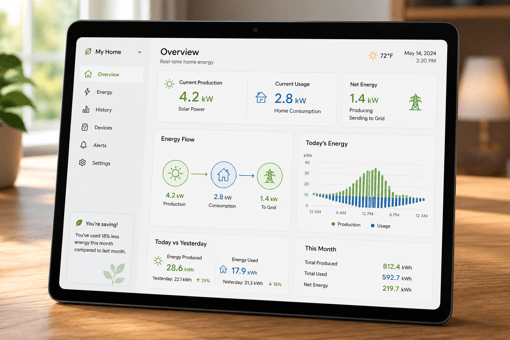
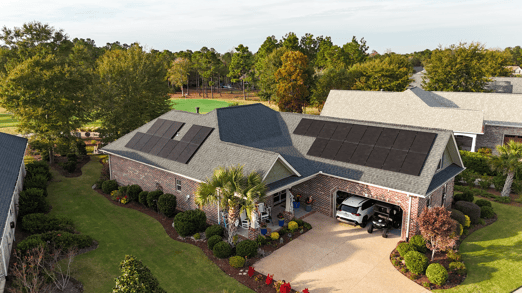
Solar doesn't fix an inefficient HVAC or a leaky attic on its own. But for a home that's addressed its efficiency basics, solar is one of the most direct tools available for reducing what you pay the utility each month. Every kilowatt-hour your panels produce is one you're not buying from Duke Energy at current rates.
In the Carolinas, solar production peaks in summer, which is exactly when your bill peaks too. A well-sized system generates the most power during the months when your cooling load is highest, so the offset lands where it matters most. For a detailed look at how solar and HVAC efficiency work together to lower summer energy costs in the Carolinas, see our guide to solar and HVAC for summer bills on the blog.
The Whole-Home Approach: Reduce First, Then Offset
The most effective strategy for a persistently high electric bill combines both sides of the equation. Reduce what you consume by upgrading to a high-efficiency HVAC system, improving insulation, and addressing the specific draw issues in your home. Then offset what remains with solar production. The two investments compound each other in a way that neither achieves alone.
This whole-home approach is how Cape Fear Energy Systems has worked since 2007. We're not a one-product company, which means when you get an estimate with us, we look at the full picture of what's driving your bill and what would actually move the needle for your home.
Ready to Stop Guessing and Start Fixing?
A high electric bill usually has a cause, and usually more than one option for addressing it. The starting point is understanding what's actually driving your costs, and that's exactly what a free estimate with our local team gives you.
Your local partner in energy independence since 2007
Let's Find Out What's Driving Your Bill and Fix It
Cape Fear Energy Systems installs solar, battery, HVAC, and whole-home energy systems for homes and businesses across NC and SC. Turnkey, NABCEP-certified, never subcontracted, with a 25-year workmanship warranty.
Get a Free Estimate