Project Snapshot
- System Size: 111 kW
- Annual Production: ~153,888 kWh
- Energy Offset: ~78%
- Battery Storage: 120 kWh
- Primary Objective: Campus resiliency and energy cost reduction
- Installation Type: Interconnected microgrid with underground wiring
The Client & Operational Context
Masonboro Baptist Church manages multiple campus buildings, each with its own utility meter and aging electrical infrastructure. The church wanted a solar solution that could withstand outages, improve campus safety, and reduce energy costs across all buildings.
The church’s goal was to modernize infrastructure, reduce operational costs, and provide backup power, while minimizing disruption to daily campus activities.
The Challenge
Key issues addressed by the project:
- Multiple meters: Each building had its own utility meter, creating unnecessary fees and complexity.
- Safety hazards: Old overhead wiring ran over playground areas, presenting a risk to children.
- Energy resilience: The church wanted a system that could continue operating during outages and provide flexible energy sharing across buildings.
- Load coordination: Each building had different energy usage patterns, which made integration challenging.
The solution needed to combine solar production, storage, and electrical consolidation into a single operational system.
The Strategy
Meter Consolidation
We consolidated four of the five utility meters onto one interconnected microgrid, simplifying billing and creating a single point for energy management. This reduced unnecessary utility fees and simplified operations.
Safety-First Wiring Design
All electrical distribution was moved underground. This eliminated the overhead lines over the play area and reduced exposure risk for children, staff, and visitors.
Storage-Integrated Solar
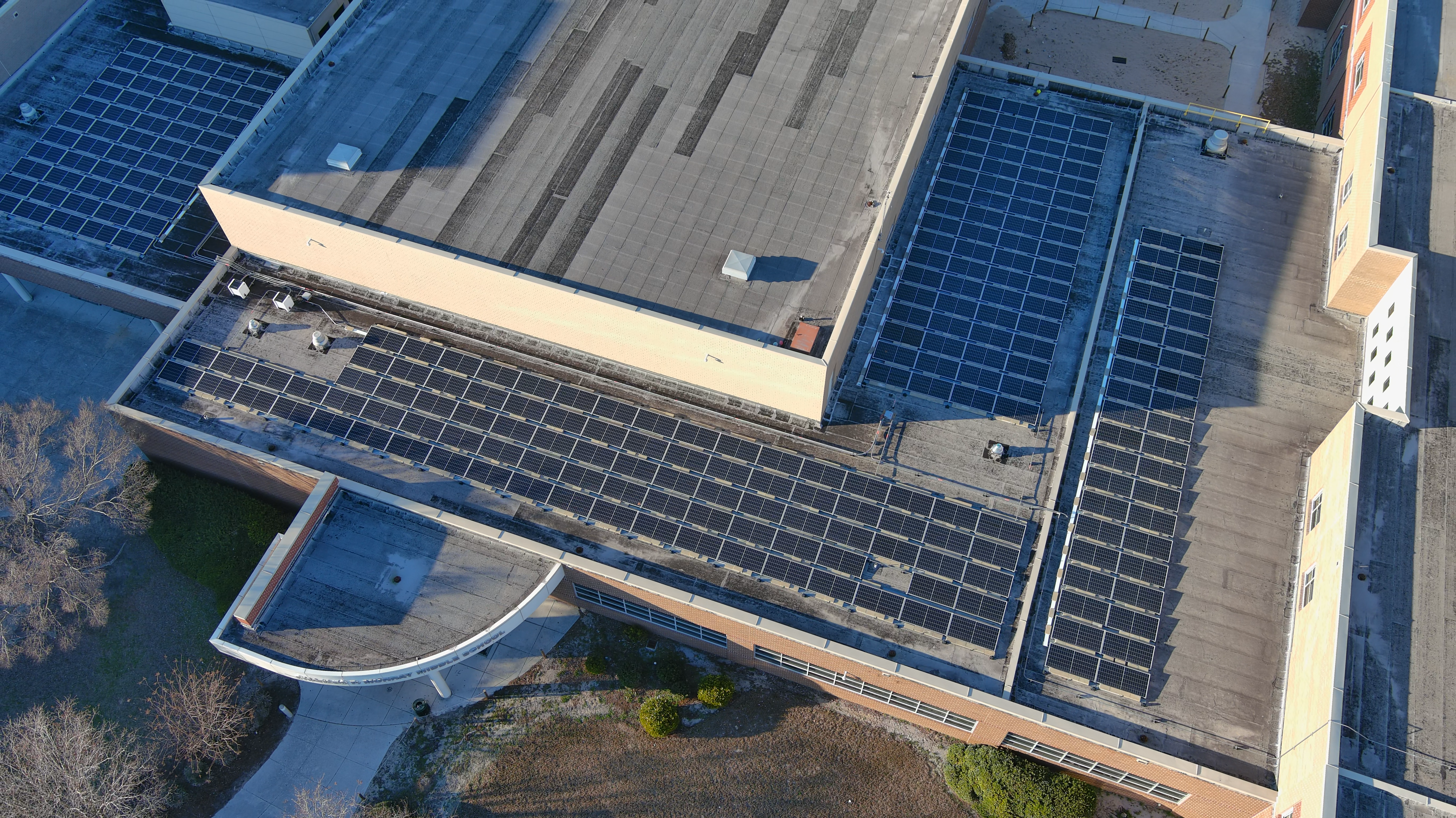
The 246-panel, 111 kW solar array was paired with 120 kWh of battery storage, enabling any building in the microgrid to contribute solar energy and draw power during outages.
Campus-Wide Energy Optimization
By interconnecting the buildings, the system balances generation and load across the campus. Excess solar production from one building can offset consumption elsewhere, maximizing efficiency and resiliency.
The Solution
Key elements of the installation:
- 246 high-efficiency solar panels installed across the campus rooftops
- 120 kWh of lithium-ion battery storage for backup power
- Underground wiring connecting the four consolidated buildings
- Microgrid design enabling energy sharing and islanding capability during outages
This setup ensures the church’s facilities can continue operating independently of the grid during emergencies, while reducing long-term energy costs and improving safety.
The Results
Financial Impact
By consolidating meters and installing on-site solar, the church reduced energy bills and eliminated redundant utility fees. The system offsets a substantial portion of campus electricity consumption and optimizes energy usage across buildings, providing a projected $293,000 in 30-year savings.
Operational Impact
The microgrid allows campus buildings to share solar and battery energy seamlessly, ensuring critical systems remain operational during outages. Underground wiring eliminates safety hazards, creating a secure environment for children, staff, and visitors. The system also simplifies energy management, allowing administrators to monitor production and load across all buildings.Community Impact
The project improves reliability for events and services while demonstrating a visible commitment to sustainability and safety. By removing overhead hazards and providing resilient power, the campus becomes a safer and more dependable space for the community. Masonboro Baptist Church’s project also serves as a model for modern, energy-resilient religious facilities.System Performance Snapshot
- 111 kW of solar generation serving four interconnected buildings
- 120 kWh battery storage provides emergency backup
- System design supports energy sharing and resiliency during outages
- Simplified single-meter billing across multiple buildings
Why It Matters
This project demonstrates the benefits of integrated campus energy systems.
Storage and microgrid capabilities allow critical facilities to operate during outages, consolidation reduces redundant fees and optimizes energy use, underground wiring removes safety hazards, and the system is scalable to accommodate future buildings or energy needs. Masonboro Baptist Church’s project shows how solar, storage, and intelligent campus design can modernize operations, protect the community, and provide long-term energy savings.