Project Snapshot
- System Size: 110 kW
- Panels: 262
- Annual Production: 147,373 kWh
- Primary Objective: Reduce operational energy costs and support sustainability initiatives
- Installation Type: Rooftop solar arrays and a ground-mounted system
The Client & Operational Context
In 2020, Murray Middle School began exploring solar energy as part of New Hanover County Schools’ broader effort to increase sustainability across district facilities and take advantage of available clean energy funding opportunities for schools.
The district sought a solution that could help offset operational energy costs while also creating educational value for students. In addition to reducing electricity usage, the project was intended to provide students with direct exposure to renewable energy technology and real-world applications of electricity generation.
The Challenge
The project required integrating solar into an active school environment while balancing energy production, educational accessibility, and long-term operational value.
The system also needed to work within the physical constraints of the campus while maximizing available space for solar generation. Designing both rooftop and ground-mounted arrays required careful coordination to ensure strong energy performance without disrupting school activities.
The Strategy
Campus-Wide Energy Offset
The solar system was designed to reduce electricity usage across the campus and support long-term operational savings for the school district.
Multi-Array System Design
By combining rooftop arrays with a smaller ground-mounted installation, the project maximized energy production across available campus space.
Educational Integration
The installation was positioned as a hands-on educational resource, helping students better understand electricity fundamentals and how solar energy systems operate.
Long-Term Sustainability Planning
The project aligned with New Hanover County Schools’ broader sustainability initiatives and clean energy goals for district facilities.
The Solution
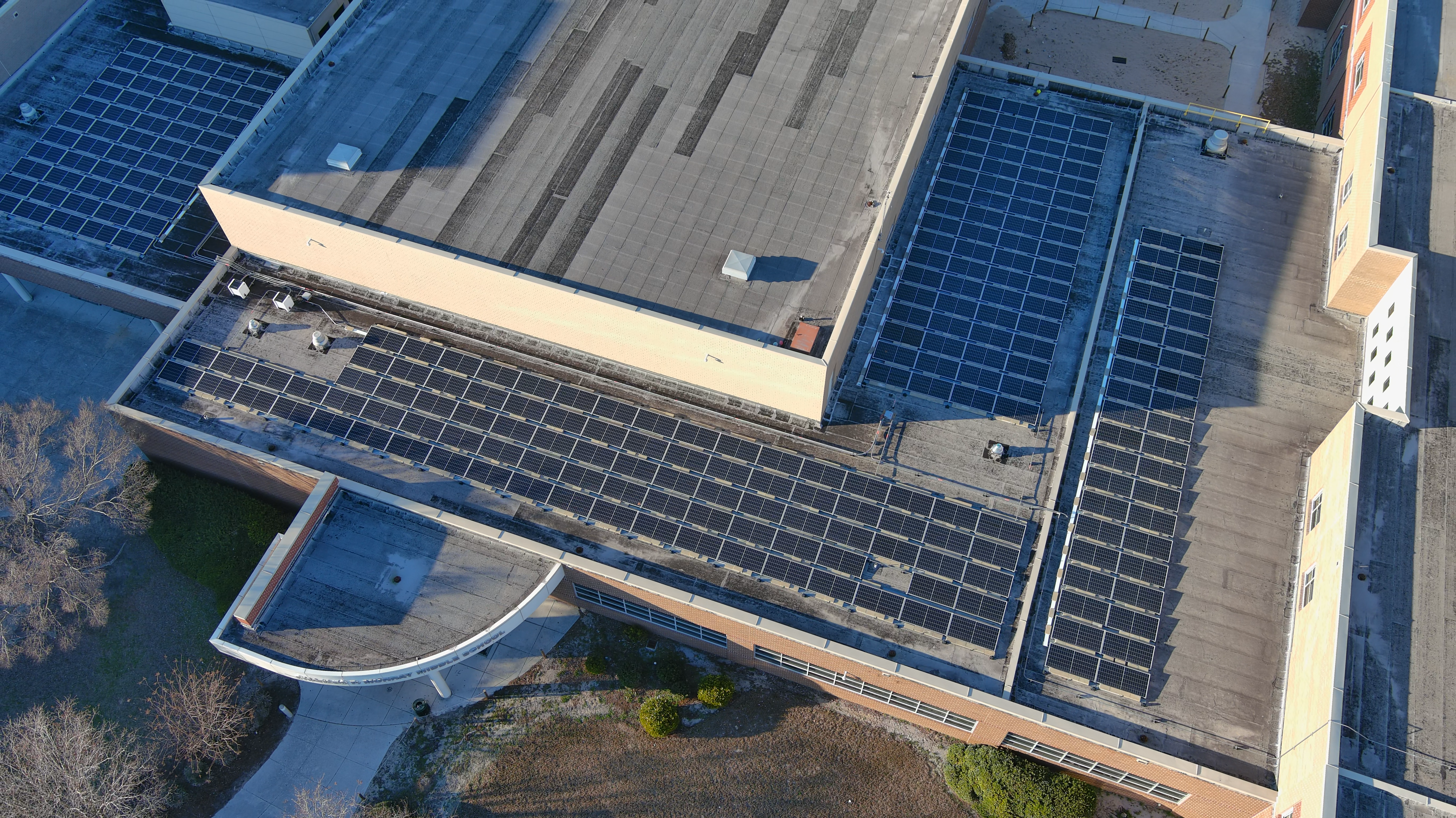
The final installation included a 110 kW solar energy system composed of 262 solar panels across both rooftop arrays and a smaller ground-mounted installation adjacent to the school. Together, the systems generate approximately 147,373 kWh annually.
The project allows Murray Middle School to produce renewable electricity directly on-site while incorporating solar technology into the educational environment for students and staff.
The Results
Financial Impact
The solar installation is projected to generate approximately $419,719 in energy savings over 25 years, helping reduce long-term operational costs for the school district.
Operational Impact
The system offsets a significant portion of the school’s electricity usage while integrating seamlessly into campus operations. The combination of rooftop and ground-mounted arrays maximizes production without interfering with daily school activities.
Community Impact
Murray Middle School students now have direct access to a real-world renewable energy system that supports learning about electricity generation and solar technology. The installation also reinforces the district’s commitment to sustainability and environmental responsibility within the Wilmington community.System Performance Snapshot
- 110 kW combined solar system
- 262 solar panels
- 147,373 kWh annual energy production
- Rooftop and ground-mounted solar installations
- $419,719 projected 25-year savings
Why It Matters
This project demonstrates how schools can use renewable energy to support both operational and educational goals. By integrating solar into the campus environment, Murray Middle School reduced long-term energy costs while creating opportunities for hands-on learning around electricity and sustainability.
The installation also reflects how public schools can leverage clean energy initiatives to improve facility efficiency while preparing students for a future increasingly shaped by renewable energy technologies.
.jpg)