It's late afternoon in September. A line of storms knocked the power out around lunch, and the inside of your house is slowly catching up to the heat outside. The lights and the refrigerator matter, sure. But the question on everyone's mind is whether the air conditioning is coming back on.
If you're shopping for a standby generator, that's the right question to ask up front. A generator for your air conditioner has to handle more than the AC's everyday running power. It has to handle the few seconds when the compressor starts, and that's where most sizing surprises happen.
Here's how generators and central air actually work together, three ways to set it up, and what to plan for in a Carolina summer. Cape Fear Energy Systems installs whole-home standby generators designed to restore power automatically, including to your cooling system.
Quick Answer: Can a Standby Generator Run Central Air?
Yes. A properly sized whole-home standby generator can run central air conditioning during an outage. Whether yours can depends on a few things:
- The size of your AC system and how much power its compressor draws when it starts
- The generator's capacity and what else is running at the same time
- Whether a soft start kit or load management is part of the design
- The fuel supply (natural gas or propane) for longer outages
The AC usually drives the sizing decision, which is why it's worth designing around from day one.
Why Your AC Is the Hardest Load for a Generator to Start
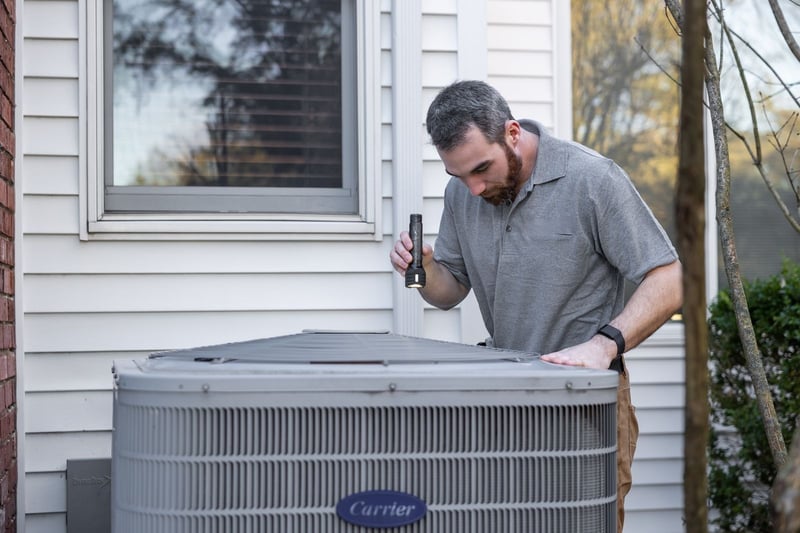
Most of what's in your home draws power smoothly. Your central air doesn't. When the compressor kicks on, it pulls a brief surge of power that can be several times what it uses once it's running. Utility power absorbs that without you noticing. A generator has to supply all of it at once, every time the AC cycles on.
If the generator can't cover that surge, the lights may dip, the AC may struggle to start, or the generator may protect itself by shedding the load. None of this means the generator is broken. It usually means the system wasn't sized or configured with the AC's startup in mind.
That's why we look at your actual equipment, not just your square footage, before recommending a generator size. Two homes of the same size can need very different generators if one has a single large AC unit and the other has two smaller zones, a well pump, and an electric range.
Three Ways to Keep the AC On During an Outage
There isn't one right setup. Here are the three we see most often, and how they compare:
| Setup | How it works | Often a fit for | What to know |
|---|---|---|---|
| Generator sized for the whole home | The generator has enough capacity to start the AC while other loads are running | Homeowners who want outages to feel like nothing happened | Larger unit and more fuel use; the simplest experience day to day |
| Generator plus a soft start | A soft start device on the AC eases the compressor's startup surge | Homes where the AC's startup is the main thing pushing the generator size up | Added to the AC system; compatibility depends on your equipment |
| Generator plus load management | The system sheds or delays big loads (like a dryer, range, or water heater) so the AC gets priority | Larger homes, or homes with several big electric loads | Some appliances may pause briefly when the AC needs power |
Many homes use a combination. The right mix depends on your AC, your other large loads, and how "normal" you want an outage to feel. Some homeowners are happy to skip the dryer for a day if it means a smaller generator and a smaller fuel bill. Others want to forget the outage is happening at all. For a broader look at sizing batteries, generators, or both for your whole home, see our guide to what size backup power system your home really needs.
Plan your backup power
Want your AC covered in the next outage?
Our local team sizes standby generators around your real equipment, starting with your air conditioner. We'll look at your AC, your panel, and your goals, then recommend a setup that fits.
Get a Free EstimateWhat a Carolina Summer Adds to the Equation
In coastal North and South Carolina, AC during an outage is about more than comfort. Summer heat and humidity build up fast in a closed house, and the longest outages tend to come with tropical weather. According to the U.S. Energy Information Administration, "Major events such as Hurricanes Beryl, Helene, and Milton accounted for 80% of the hours without electricity in 2024."
That has two practical effects on planning. First, a generator that runs the AC through a multi-day outage needs a fuel plan to match. On an uninterrupted natural gas supply, a standby generator can keep running as long as it's needed. Propane homes should size the tank with AC runtime in mind, since that's usually the biggest draw on fuel.
Second, near the coast, equipment should hold up to salt air. The Generac units we install use corrosion-resistant aluminum enclosures, and placement matters just as much as the enclosure. Where the generator sits relative to the home, the prevailing wind, and flood-prone ground is part of the design, not an afterthought.

Where Batteries Fit In
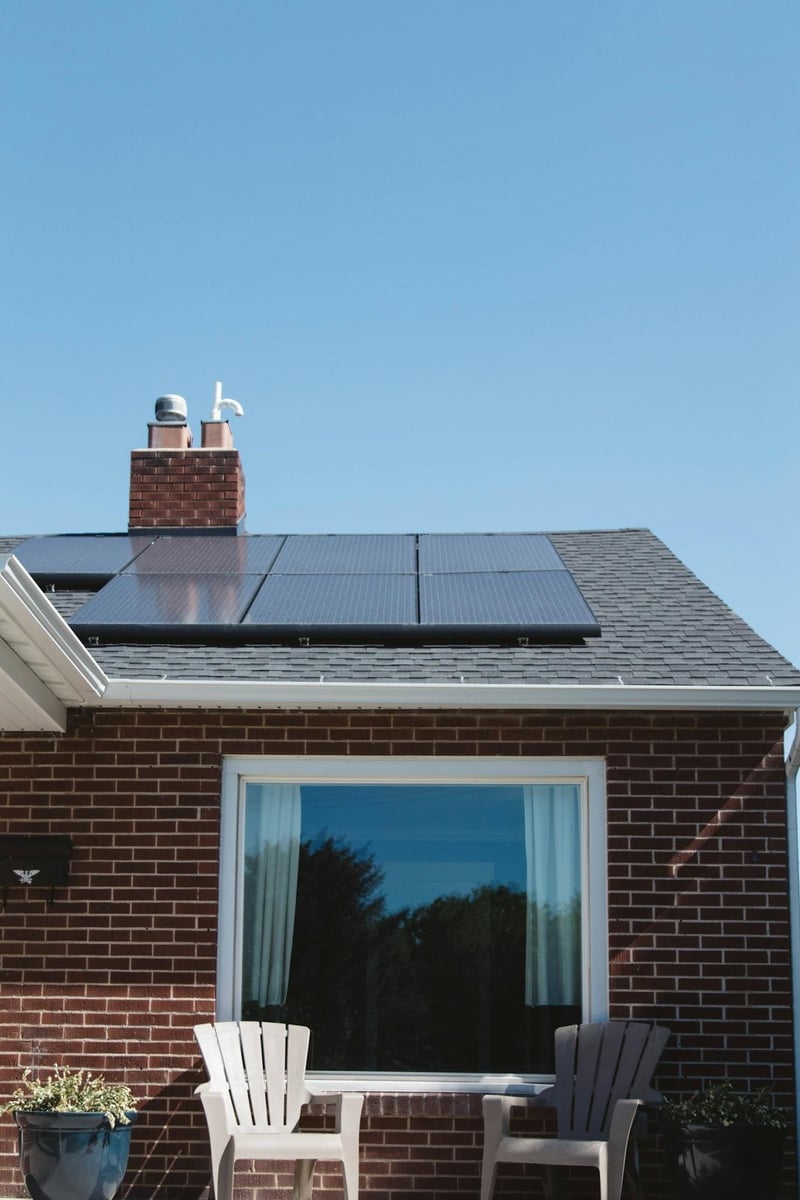
A generator isn't the only way to keep cooling on, and it doesn't have to work alone. A home battery covers short outages quietly and instantly. With the right design, it can support some HVAC load. A generator covers the long ones. Paired with solar, a battery can also recharge during the day, which eases the load on a generator during an extended outage.
This is where planning the whole home pays off. When the generator, battery, AC, and panel are designed together, you're not stuck finding out during a storm which piece can't keep up with the others. If you're weighing one against the other, our comparison of battery storage vs. generators for coastal homes walks through the trade-offs.
The Safe Way to Power Your AC During an Outage
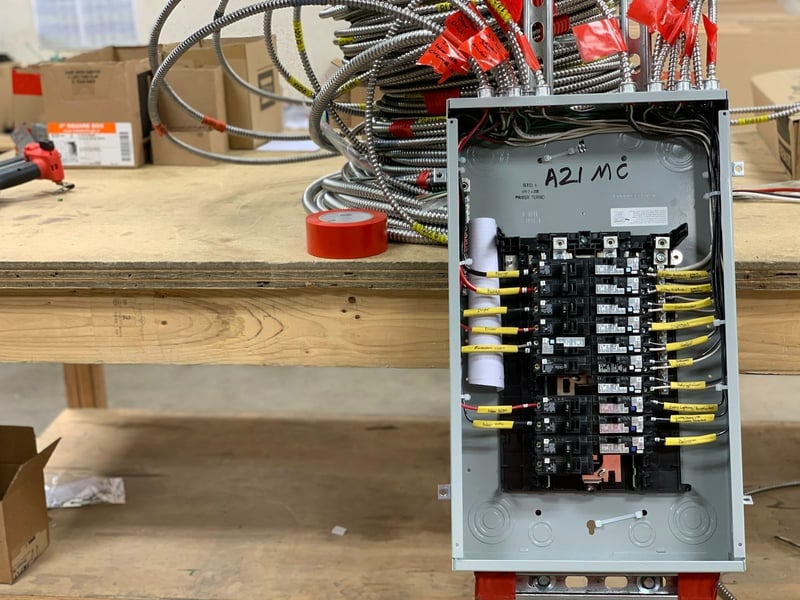
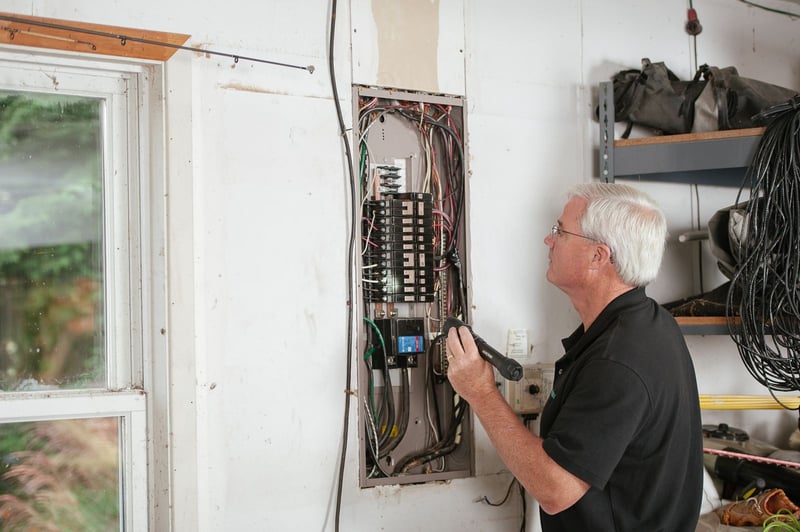
How backup power connects to your home matters as much as how big it is. A standby generator should always connect through a professionally installed transfer switch, which keeps generator power and utility power separated. As the Electrical Safety Foundation explains, "Transfer switches isolate utility power and generator power to prevent backfeeding, which can be deadly," including to utility crews working on the lines.
If you're using a portable generator in the meantime, never plug it into a wall outlet or connect it to household wiring without a transfer switch. Keep it outside and well away from the house. ESFI's portable generator guidance, citing the Consumer Product Safety Commission, recommends at least 20 feet from doors, windows, and vents to keep carbon monoxide out of the home. Leave all connections to your AC system and electrical panel to a licensed professional.
Generator and AC Questions We Hear Most
Can a 22 kW generator run central air?
In many homes, yes. The Generac air-cooled standby generators we install come in 22 kW and 28 kW models. Whether one can run your central air depends on your AC's size, how it starts, and what else runs at the same time. Soft starts and load management can widen what a given generator can handle.
Will a portable generator run my central AC?
Usually not practically. Most portable generators aren't built for a central AC's startup demand. Any connection to your home's wiring requires a professionally installed transfer switch.
Does a soft start kit help with a generator?
Often. A soft start reduces the compressor's startup surge, which can let the AC start on a smaller generator or alongside more loads. Compatibility depends on your specific AC equipment.
Will the generator run the AC and everything else at once?
It depends on the design. A whole-home-sized generator can. A smaller one paired with load management will prioritize the AC and briefly pause other large loads.
Should I look at my AC before buying a generator?
It's worth it. If your AC is aging or oversized, it may make sense to review your HVAC system at the same time as your backup power plan. A newer, efficient system can be easier to back up, and you avoid sizing a generator around equipment you're about to replace.
Stay Cool the Next Time the Grid Goes Down
The AC is the load that shapes almost every generator decision, so it's the best place to start. Tell us what you want running during an outage, and our local team will design a standby system around your home, not a one-size-fits-all package. We've been helping Carolina homeowners prepare for storm season since 2007, and we're still here to service the system after it's installed.
Your local partner in energy independence since 2007
Keep your home cool through the next Carolina outage.
Our turnkey, NABCEP-certified team designs and installs standby generators, batteries, solar, and HVAC as one whole-home system across NC and SC, with no subcontractors.
Get a Free Estimate